How Tree Roots Affect Drain Lines in Older Neighborhoods in the Fairhope & Daphne Area

Big shade trees are part of what makes Fairhope and Daphne charming. In older neighborhoods like the Fruit and Nut District, Montrose, and Olde Towne Daphne, those roots can invade aging drain lines and cause slow drains, recurring clogs, or even sewage backups. This guide explains how root intrusion happens, the early signs many homeowners miss, and why established blocks see more issues. If you need a thorough reset, schedule professional drain cleaning with a local pro you trust.
Why Tree Roots Target Older Drain Lines
Roots grow toward moisture and nutrients. Any tiny gap in a pipe is an open door. Older homes in Fairhope and Daphne are more likely to have clay or cast-iron lines with joints every few feet. Over time, joints shift, gaskets dry out, and hairline cracks form. When warm, humid Gulf air meets cool pipe walls, condensation forms and draws moisture into the pipes.
Mature trees and older clay or cast-iron lines are a risky mix. Live oaks, magnolias, and camellias have persistent feeder roots that seek damp soil. Once a root hair finds a joint, it thickens, branches, and acts like a net. Debris catches, flow slows, and your line starts to misbehave.
How Root Intrusion Actually Happens Underground
Picture a long zipper. Each joint in that zipper is a potential leak point. Here is the typical sequence we see across Baldwin County:
- A joint loosens slightly due to soil movement or age, releasing vapor and a small amount of water.
- Feeder roots detect moisture and push into the joint, starting as thin as fishing line.
- Inside the pipe, roots thicken and branch. Paper and grease snag on the roots.
- Flow slows, solids settle, and the blockage grows until toilets gurgle or a backup starts.
Heavy rains, king tides, and tropical systems common to the Gulf Coast can speed up this cycle by saturating soils and stressing weak joints. In sloped areas, such as along Scenic 98, groundwater movement can shift older lines and widen gaps.
Early Warning Signs Homeowners Often Miss
Root problems rarely show up all at once. They whisper first. Watch for these patterns, especially in older blocks near big oaks:
- Recurring slow drains that return a week or two after plunging or snaking.
- Gurgling from a tub or shower when a toilet flushes, especially at night.
- Foul odors near floor drains or in the yard after rain.
- Green strips of grass or damp patches above the buried line.
- Toilets that need multiple flushes even with low use.
Do not ignore slow drains that come back after plunging. That often means roots are catching debris just downstream, not that the problem is inside the fixture.
Why Established Neighborhoods See More Drain Problems
Fairhope and Daphne have many homes built before PVC became common. Clay tile and cast iron were standard. Those materials age differently from today's solvent-welded PVC. Clay can crack at the bells, and cast iron can corrode from the inside out. Combine that with decades of tree growth and seasonal soil movement, and root intrusion becomes a frequent cause of trouble in established areas.
Neighborhood character matters too. The shady canopy that keeps summer cooler also means dense root systems. In Lake Forest, long runs from the house to the street can include multiple turns. Each turn and joint is another chance for a root to get in. In coastal pockets closer to the bay, fluctuating groundwater adds stress that widens tiny openings over time.
Professional Diagnosis: Seeing What Is Really Happening
A trained plumber does not guess at root problems. They confirm. The most reliable method is a sewer camera inspection. A small camera snakes through the line and records the exact location and extent of root growth, joint separations, and cracks. This lets your plumber map the line, mark problem spots at the surface, and plan the right fix.
In some cases, the plumber may also perform a line locate to mark the pipe path in your yard. That helps avoid damage to sprinklers and landscaping during any repair. It also shows if multiple trees are affecting different sections of the same line.
For heavy root mats, a pro may use high-torque cutting heads or water-powered jetting to clear the line. This is not a DIY choice. Choosing the wrong tool can crack a weakened clay joint or score cast iron. A careful approach protects the pipe while restoring flow.
Drain Cleaning Options For Root Intrusion
Every home and pipe material is different, but most solutions fall into a few categories:
Mechanical clearing to restore flow now. Specialized blades or root-cutting tools remove growth and open the line. This is often step one, especially when waste is backed up.
Hydro jetting for deep cleaning. High-pressure water jets scour the pipe wall and flush debris out. When used by a trained tech at the right pressure, jetting removes fine root hairs the blades can miss.
Camera verification. After clearing, a camera run confirms that the pipe is open, the joints are intact, and there are no breaks requiring repair.
Spot repair or full replacement when needed. If a joint has collapsed or the pipe is fractured, localized digging or trenchless methods may be considered. The right choice varies by yard layout, depth, and material.
If you are researching options, start with professional drain cleaning so a plumber can open the line, inspect it, and advise you on the most durable next step.
Prevention For Yards With Mature Trees
You cannot stop roots from seeking water, but you can reduce the chance they find a way in. Here are practical prevention ideas that protect your line without risky chemicals or guesswork:
Map the line. If you have big trees within several feet of the probable route, schedule a camera inspection to document the condition. Keep the recording for future comparison.
Plan landscaping with the pipe path in mind. Avoid planting thirsty species near the line. Direct irrigation away from the trench area so the soil around joints does not stay soggy.
Schedule routine maintenance. Homes with older clay or cast-iron lines benefit from periodic cleaning before seasonal surges. A pro will set a schedule that fits your materials and tree load.
Schedule service at the first sign of gurgling. Small intrusions are easier to clear and less likely to damage fragile joints.
What a Pro Checks During a Service Visit
A good plumber follows a consistent process so you get a clear picture and a reliable fix. Expect steps like these:
- Confirm symptoms and history, including recent weather and any past root issues.
- Open an accessible cleanout to evaluate flow and check for standing water.
- Use the right clearing method for your pipe material and condition.
- Run a camera to confirm results and mark any repair points.
- Discuss long-term prevention based on tree species, soil condition, and line material.
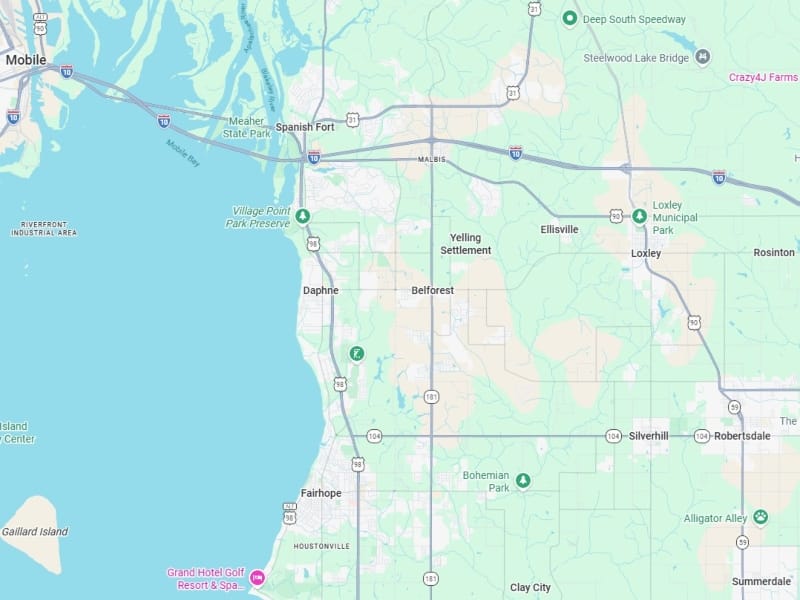
If you are new to the area, review our Fairhope and Daphne service area to see how local soil and tree patterns can affect older lines in your neighborhood.
Local Factors in Fairhope & Daphne
Our region's mild winters and long growing season keep roots active most of the year. Spring growth pushes fine root hairs toward moisture, and late summer storms leave soils saturated. Bay breezes help, but they also bring swings in moisture that stress older joints. In older parts of Fairhope near downtown and along Section Street, large canopy trees sit close to original service laterals. In Daphne's established blocks near Belrose Avenue and Lake Forest, long laterals cross mixed soils that can shift with heavy rain.
Homes built during different decades often used different materials. Many mid-century homes have cast iron under the slab and clay tile in the yard. Each transition is a common place for roots to get in. A clear inspection and maintenance plan keeps those transitions from turning into repeat clogs.
When to Call a Plumber
Call at the first sign of repeat slowdowns, gurgling, or odors. A small issue caught early is quicker to solve and less likely to lead to a backup. If you have guests coming for a holiday or a graduation, do not wait for the line to fail on a busy weekend. A short visit now can save your floors and your plans.
Our team can open the line, verify the cause with a camera, and help you plan a durable fix for your specific yard and pipe material. If you are just starting your research on drain cleaning, check our home base and then set up an inspection that fits your schedule.
Get Trusted Help From a Local Plumber
For fast, professional drain cleaning in Fairhope and Daphne, call 251-989-0011 to speak with 5 Starr Plumbing Heating and Air today. We serve historic streets and newer subdivisions with the same careful approach. Clear communication, camera-confirmed results, and respect for your yard come standard. When roots push in, we push back with the right tools and a plan that fits your home.
If you want a simple next step, book a visit for expert diagnosis and thorough drain cleaning. We will confirm the problem, show you what we find, and explain options in plain English so you can decide with confidence.